What Is an AI Agent Framework?
AI agents are revolutionizing how tasks are automated and decisions are made. These intelligent systems can observe, learn, and act to achieve specific objectives. But what makes these agents work so seamlessly? Enter the AI agent framework—the backbone of modern AI agent development.
An AI agent framework is a structured platform that provides the tools, libraries, and algorithms necessary to create, train, and deploy AI agents. Think of it as a developer’s toolkit, purpose-built to simplify the complexities of building autonomous systems. From managing data flow to integrating machine learning models, these frameworks do the heavy lifting, allowing developers to focus on crafting intelligent agents that solve real-world problems.

AI Agent Framework Functions - Perception, Reasoning, Action and Learning
How Does an AI Agent Framework Work?
AI agent frameworks are designed to handle the core functions of any AI agent:
-
Perception: Collecting data from the environment through APIs, sensors, or user inputs.
-
Reasoning: Processing the data to make informed decisions or formulate strategies.
-
Action: Executing those decisions, such as clicking buttons, sending messages, or triggering events.
-
Learning: Continuously improving performance with machine learning or reinforcement learning.
By managing these tasks, an AI agent framework ensures agents are not only functional but also adaptable, learning from their experiences to perform better over time.
Why Are AI Agent Frameworks Important?
AI agent frameworks are the hidden engines driving many of the technologies we rely on daily. From virtual assistants like Siri and Alexa to chatbots that help you book travel or troubleshoot software, these frameworks streamline the process of developing and deploying intelligent agents.
For businesses, adopting an AI agent framework means faster development cycles, cost savings, and smarter solutions. They empower companies to automate repetitive tasks, enhance customer experiences, and maintain a competitive edge in today’s fast-paced digital economy.
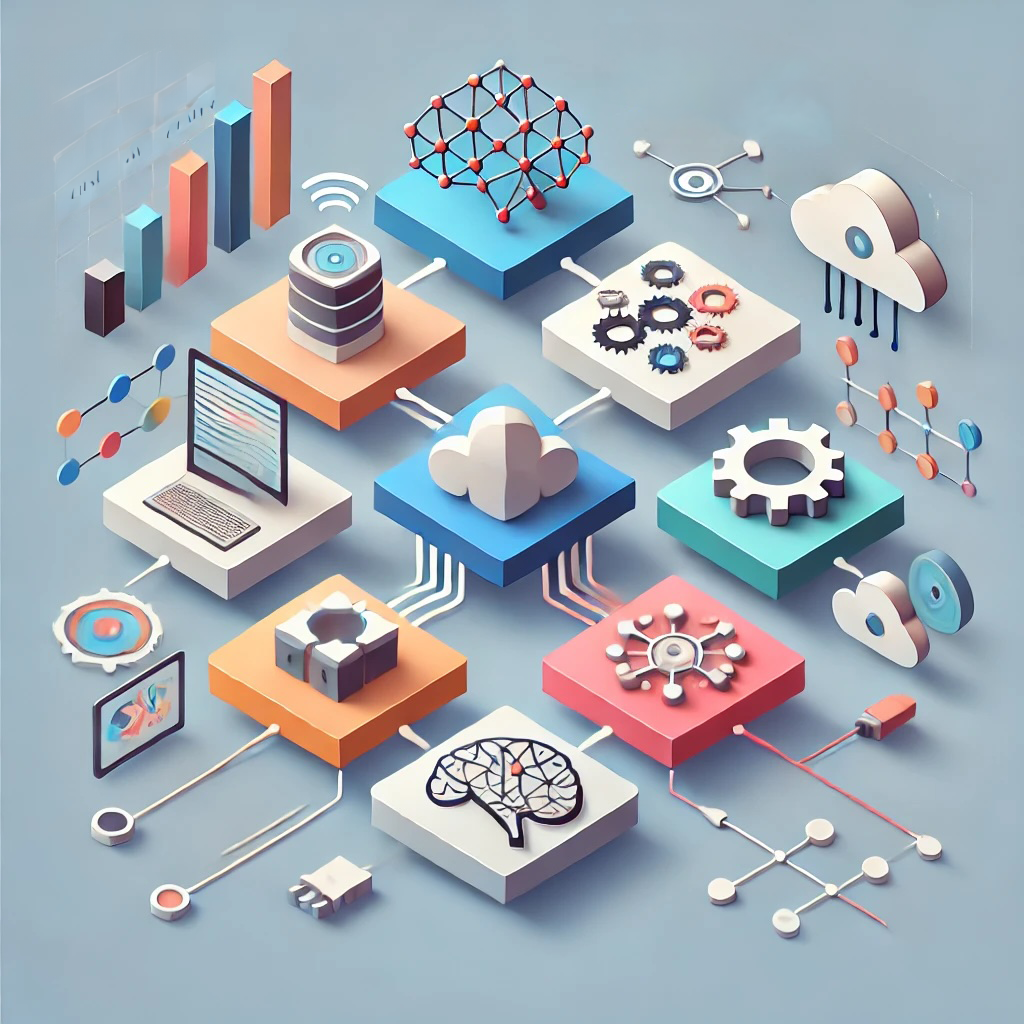
Components of AI Agent Framework
Key Components of an AI Agent Framework
AI agent frameworks are built to simplify the creation of intelligent, autonomous systems by providing pre-designed modules and tools. To understand their true value, let’s break down the key components that make these frameworks indispensable for developers and businesses.
1. Environment Interaction
At the heart of any AI agent is its ability to interact with its environment. Frameworks provide APIs, libraries, or simulators to help agents:
-
Perceive the environment through sensors, user inputs, or data feeds.
-
Respond dynamically to changes by gathering real-time information and making adjustments.
For example, Unity ML-Agents provides a simulated environment for training agents in virtual spaces, ideal for applications like robotics and gaming.
2. Knowledge Representation
AI agents need a way to store and retrieve information effectively. Frameworks often include tools for:
-
Data Structuring: Organizing information into formats the agent can easily process.
-
Memory Management: Storing past actions, decisions, or interactions for future use.
Frameworks like LangChain excel in helping large language models (LLMs) handle contextual data, making them smarter over time.
3. Decision-Making Engine
The decision-making engine is the brain of the AI agent, powered by algorithms that analyze data and determine the next course of action. Frameworks support:
-
Logic-Based Decisions: Rule-based systems for predictable environments.
-
AI-Driven Choices: Machine learning models that adapt to complex scenarios.
Microsoft’s Bot Framework, for example, integrates decision-making tools that enhance customer service chatbots.
4. Learning Mechanisms
Modern AI agents don’t just follow instructions—they learn and improve. Frameworks provide built-in support for:
-
Supervised Learning: Training models with labeled datasets.
-
Reinforcement Learning: Reward-based learning in dynamic environments.
-
Unsupervised Learning: Identifying patterns in unstructured data.
Unity ML-Agents, again, shines in this area, offering robust reinforcement learning capabilities for training agents in real-time.
5. Communication Interface
For AI agents interacting with humans, communication is key. Frameworks often include:
-
Natural Language Processing (NLP): Understanding and generating human-like text or speech.
-
Multi-Channel Support: Enabling interaction across platforms like chat, email, or voice assistants.
Frameworks like Rasa are tailored for conversational AI, helping businesses build highly engaging virtual assistants.
6. Integration Tools
To make deployment seamless, frameworks include tools to integrate agents with existing systems:
-
Cloud Connectivity: Hosting agents on scalable platforms.
-
APIs and SDKs: Plug-and-play components for compatibility with various applications.
Popular AI Agent Frameworks and Their Features
Different frameworks cater to unique use cases, industries, and levels of complexity. Below, we’ll explore some of the most popular AI agent frameworks, their standout features, and why they’re favored by developers and businesses alike.
1. Rasa
-
Overview: An open-source framework for building conversational AI and chatbots.
-
Key Features:
-
Natural Language Understanding (NLU) and Natural Language Generation (NLG).
-
Integration with multiple messaging platforms like WhatsApp, Slack, and Facebook Messenger.
-
Customizable pipelines for creating domain-specific bots.
-
-
Use Cases: Customer support bots, virtual assistants, and FAQ systems.
-
Why It’s Popular: Rasa is developer-friendly, highly customizable, and ideal for businesses looking to build AI agents with precise conversational capabilities.
2. LangChain
-
Overview: A framework for building AI agents using Large Language Models (LLMs).
-
Key Features:
-
Modular design for chaining prompts and decisions.
-
Tools for integrating external APIs and databases.
-
Memory capabilities for maintaining context across interactions.
-
-
Use Cases: Agents for customer service, content generation, and workflow automation.
-
Why It’s Popular: LangChain excels in leveraging the power of LLMs like GPT-4, making it perfect for developing context-aware, intelligent systems.
3. Microsoft Bot Framework
-
Overview: A robust enterprise-grade framework for creating chatbots and AI-powered agents.
-
Key Features:
-
Seamless integration with Microsoft Azure services.
-
Built-in tools for NLP, intent recognition, and decision-making.
-
Scalable architecture for enterprise-level applications.
-
-
Use Cases: Large-scale customer service systems, virtual assistants, and productivity tools.
-
Why It’s Popular: Its enterprise focus and compatibility with Azure make it a top choice for businesses with complex needs.
4. Hugging Face Transformers
-
Overview: A versatile library for building AI agents with state-of-the-art machine learning models.
-
Key Features:
-
Pre-trained models for a variety of tasks (e.g., text, vision, speech).
-
Simple APIs for fine-tuning models on custom datasets.
-
Support for popular frameworks like PyTorch and TensorFlow.
-
-
Use Cases: Language translation, text summarization, and conversational AI.
-
Why It’s Popular: Hugging Face makes cutting-edge AI accessible and is backed by a vibrant developer community.
5. Unity ML-Agents
-
Overview: A framework focused on training AI agents through reinforcement learning in simulated environments.
-
Key Features:
-
Integration with Unity’s game engine for realistic simulations.
-
Support for multi-agent training scenarios.
-
Compatibility with TensorFlow and PyTorch for advanced model development.
-
-
Use Cases: Robotics, gaming AI, and autonomous systems.
-
Why It’s Popular: Its ability to simulate environments makes it invaluable for industries requiring agent training in complex, real-world scenarios.
The Future of AI Agent Frameworks: Top 4 Ideas
The future of AI agent frameworks is packed with potential, driven by ongoing advancements in artificial intelligence and an ever-growing demand for smarter, more efficient systems. Below, we explore the top four trends that are likely to shape the next generation of frameworks, reimagining how AI agents are built, deployed, and utilized.
1. Hybrid Frameworks for Versatility
As the complexity of AI applications increases, the demand for frameworks that integrate multiple AI paradigms is rising. Future AI agent frameworks are expected to combine natural language processing (NLP), reinforcement learning, computer vision, and other modalities into a unified platform. For instance, a hybrid framework could enable an AI agent to interpret spoken commands, analyze visual inputs from cameras, and execute physical actions through robotics.
This integration would unlock new possibilities in industries like healthcare, logistics, and autonomous vehicles, where tasks often require agents to process diverse data types. OpenAI’s GPT-4 has already showcased multimodal capabilities, paving the way for more sophisticated hybrid systems. Similarly, research into reinforcement learning with large language models (LLMs) hints at frameworks that can seamlessly switch between understanding, reasoning, and acting in real-world scenarios. These developments promise to make AI agents more adaptable and powerful than ever before.
2. Democratization Through Low-Code/No-Code Platforms
The next wave of AI frameworks aims to make AI development accessible to a broader audience through low-code and no-code solutions. By abstracting technical complexities, these platforms empower non-developers to create and deploy AI agents with minimal programming knowledge. For example, business users could configure a customer service chatbot or a workflow automation agent using simple drag-and-drop interfaces.
This democratization of AI aligns with Gartner’s prediction that by 2025, 70% of new AI solutions will be developed using low-code or no-code platforms. Tools like Google’s AutoML and Rasa’s interactive design features already point in this direction, reducing development time and lowering the barrier to entry. As these platforms evolve, they’ll allow businesses of all sizes to harness AI, fostering innovation and enabling faster time-to-market for AI-driven solutions.
3. Greater Emphasis on Explainability and Ethics
As AI becomes deeply embedded in decision-making processes, the need for transparency and ethical development will become even more critical. Future AI agent frameworks will prioritize explainability, allowing developers and users to understand how agents make decisions. This focus on “Explainable AI” (XAI) ensures that systems remain fair, unbiased, and compliant with regulations.
For example, built-in explainability tools in frameworks will help organizations identify and mitigate biases in their AI systems, providing real-time insights into decision-making logic. With regulations like the EU’s AI Act and growing global emphasis on ethical AI, frameworks must offer features to ensure compliance while fostering trust. Tools such as SHAP and LIME, already popular in machine learning pipelines, are likely to become standard in AI agent frameworks, making transparency a cornerstone of their functionality.
4. Cloud-Native and Edge Computing Integration
The scalability and performance of AI agents will see a significant boost as frameworks increasingly embrace cloud-native architectures and edge computing. Cloud-native frameworks provide seamless scalability, allowing organizations to handle growing workloads efficiently. At the same time, edge computing will enable AI agents to process sensitive or real-time data locally, reducing latency and enhancing privacy.
For example, a retail chain could use edge-based AI agents to analyze in-store customer behavior while relying on cloud resources for centralized training and analytics. This combination is particularly valuable for IoT applications, autonomous systems, and industries requiring split-second decision-making. According to IDC, 50% of new enterprise AI systems will include edge computing capabilities by 2026, signaling a clear shift in how and where AI agents operate. Frameworks like Unity ML-Agents are already exploring these integrations, making them essential for future-proof AI applications.
A Transformative Future
These advancements will redefine the capabilities of AI agent frameworks, enabling smarter, more accessible, and ethical systems that can seamlessly scale to meet diverse business needs. From hybrid frameworks that integrate multiple AI paradigms to low-code platforms democratizing AI development, the future holds exciting possibilities. By prioritizing transparency, leveraging edge computing, and embracing innovation, businesses can stay ahead in the AI-driven landscape.
Ready to transform your business with cutting-edge AI agent frameworks? Contact us today to explore tailored solutions that align with your goals and drive innovation!
[
Lets Connect
](http://www.phenx.io/contact)
Article tools